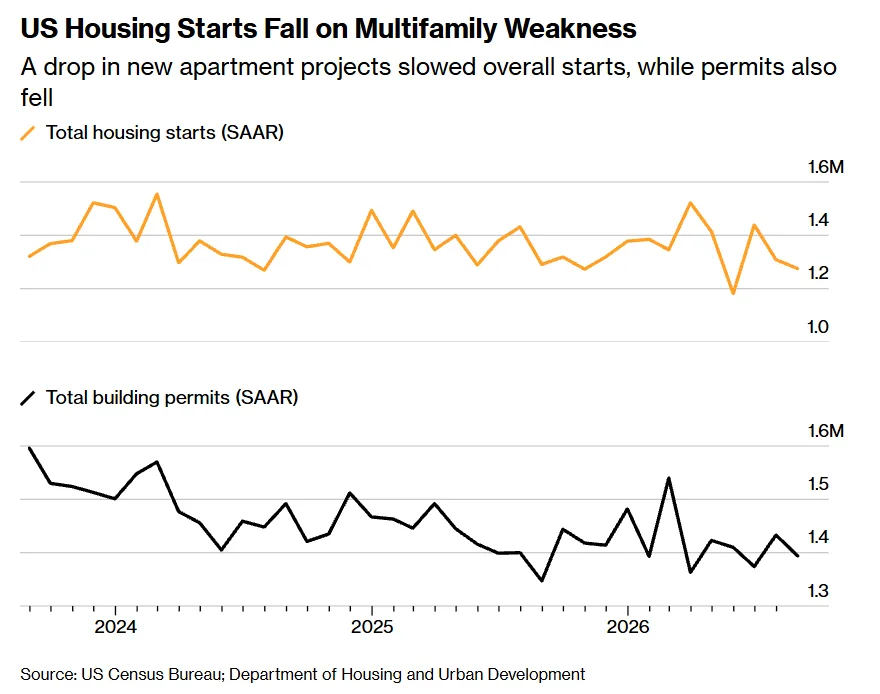
US housing starts fell 2.6% in August as multifamily starts plunged nearly 22%, while permits and completions also weakened.

By Valerija via CRE Daily <— Click here for complete article and similar stories
- US housing starts fell 2.6% in August to a 1.28M annualized pace, below economists’ expectations.
- Multifamily starts plunged nearly 22%, while single-family starts rose 7.6% to their fastest pace since March.
- Permits and completions also declined as near-7% mortgage rates kept pressure on residential construction and builder demand.
New US residential construction weakened in August, with multifamily projects driving the decline, according to a recent Bloomberg report. The August housing report showed total starts falling 2.6% to a 1.28M annualized pace, below economists’ 1.32M median forecast.
The Details
Federal housing data showed multifamily starts falling nearly 22% in August. By contrast, single-family construction rose 7.6% to a 918,000 annualized rate, its fastest pace since March.
The regional picture was also uneven. Starts in the South fell 1.3% to a three-month low, while the West reached a five-month high. In the Midwest, single-family starts improved even as multifamily construction slumped. Additionally, the monthly data is volatile. The government report placed the 90% confidence interval for August’s change between a 14.6% decline and a 9.4% gain.
The single-family increase was fueled by gains in the West and Midwest. Even so, the nearly 22% multifamily drop was large enough to pull total starts below expectations.
Permits and Completions Weaken
Other measures pointed to softer construction activity beyond the headline starts figure. Housing completions dropped nearly 12% to their slowest pace since the end of 2018.
Single-family completions fell to their lowest level since before the pandemic. Meanwhile, overall building permits declined 2.7%, signaling less future construction activity in the pipeline.
Permits for one-family homes fell 1.8% to an 878,000 annualized pace. The combination of weaker permits and completions added to the slowdown in the August report.
The weakness across permits and completions matters because both sit on different points of the development cycle. Starts measure new work, permits signal future activity, and completions show projects reaching delivery.
Higher Rates Pressure Builders
Borrowing costs remain a major constraint for residential development. Mortgage Bankers Association data cited by Bloomberg showed the average 30-year mortgage rate nearing 7% last week, the highest in more than a year.
Higher financing costs have limited home purchases and weighed on builder sentiment. National Association of Home Builders figures also showed more builders using incentives and price cuts to attract buyers.
Lennar reported lower revenue and new orders from a year earlier in its latest quarter. The builder also said margins were under pressure from price reductions and heavier incentive use.
Builders have another reason to stay cautious. Bloomberg noted that new-home inventories remain well above pre-pandemic levels, limiting the need to accelerate construction quickly.
The single-family rebound also sits beside weaker completion data. One-family completions fell to their lowest pace since before the pandemic, even as starts improved during August.
Why It Matters
Housing starts have subtracted from economic growth through residential investment in five of the past six quarters. The Atlanta Fed’s GDPNow forecast estimated residential investment would subtract 0.16 percentage point from third-quarter growth.
Multifamily construction was the biggest drag on August’s headline starts figure. That matters for apartment investors because fewer new projects can change the future supply pipeline, even when single-family activity improves.
Builders also face elevated inventories relative to pre-pandemic levels. That gives developers another reason to remain cautious about ramping up construction while financing costs stay high.
The split between apartment and single-family activity also complicates the national picture. A stronger one-family month was not enough to offset the sharp multifamily decline.
What’s Next
The August permit decline points to additional pressure on future construction if the trend persists. Capital Economics economist Bradley Saunders said elevated and rising borrowing costs support a continued downward trend in housing starts.
For CRE investors, the next releases will show whether the multifamily plunge was monthly volatility or part of a broader pullback. The wide confidence interval makes several more months of data especially important.
 The Commercial Real Estate Alpha Site
Leave a comment