Senate housing bill uncertainty stalls build-to-rent investment, freezing new deals and halting financing across the market.
By Jordan B via CRE Daily <— Click here for complete article and others from Jordan.
- The bill’s seven-year sale requirement could threaten construction of 40,000 BTR units annually, per NAHB.
- Major lenders and investors, including Fannie Mae and Freddie Mac, have stopped new BTR deals.
- The legislative freeze is already reducing new housing supply, raising costs despite aims to improve affordability.
Build-to-Rent Capital on Pause
The US build-to-rent market has entered a near-standstill as the 21st Century Road to Housing Act faces Congressional uncertainty. According to Bisnow, key industry players have stopped buying and financing BTR properties after the Senate included a rule that would require large-scale developers to sell communities to homeowners after seven years. This provision has led to immediate paralysis across BTR investment, affecting both new projects and refinancing for existing ones.
Market Reactions and Immediate Impact
Developers like Kinloch Homes and Wolfson BTR report halted sales and refinancing difficulties, with lenders and equity investors alike holding off on BTR deals. According to industry feedback, little to no new BTR financing is proceeding—even from government-sponsored enterprises like Fannie Mae and Freddie Mac. The uncertainty has caused developers to shelve new projects, put existing assets in limbo, and face increased borrowing costs where deals are still possible. This marks a sharp reversal from the rapid expansion phase seen in recent years, when new communities were scaling quickly across major metros.
Uncertainty Threatens New Supply
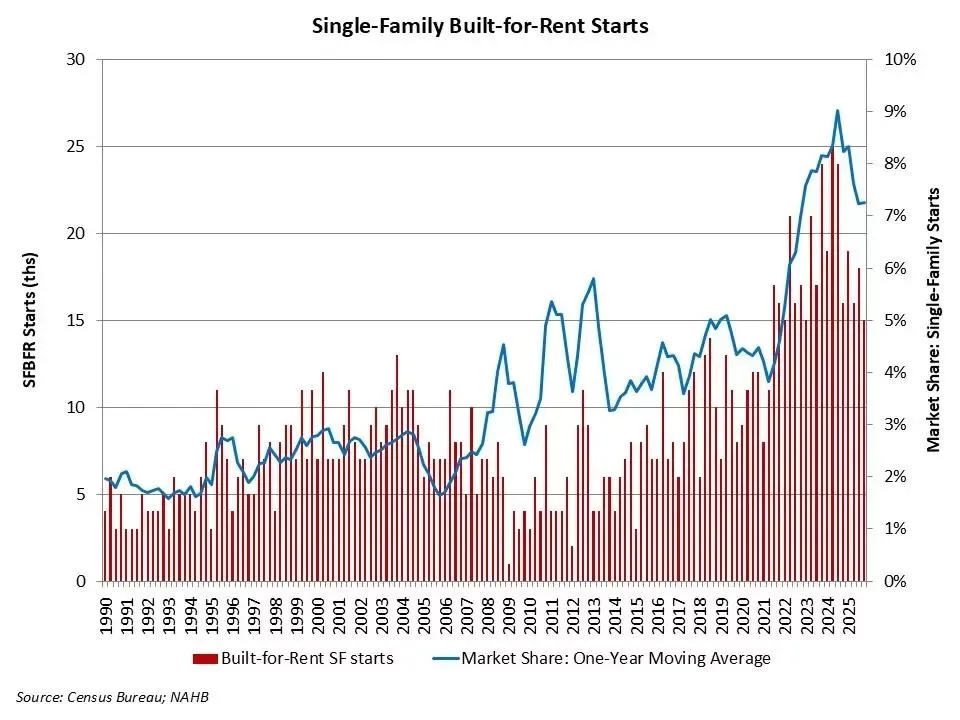
Build-to-rent activity surged post-pandemic, yet NAHB estimates that the Senate’s forced-sale requirement could jeopardize 40,000 BTR units per year if enacted. Industry surveys show that, even before the bill becomes law, this uncertainty has already “frozen BTR capital” and halted new deals. The result is not only a pause in additional housing supply, but also upward pressure on rents for BTR homes as inventory growth stalls.
Outlook Remains Cloudy
With no clear path for Congressional compromise, the freeze on BTR development could persist. Broader provisions in the bill, such as proposed incentives for housing development and faster permitting, offer little immediate relief as long as the BTR restrictions remain. Industry leaders warn that without swift resolution, the intended affordability gains could be undermined by the ongoing build-to-rent uncertainty.


Leave a Reply