2Q 2025 mid market Marcus & millichap report
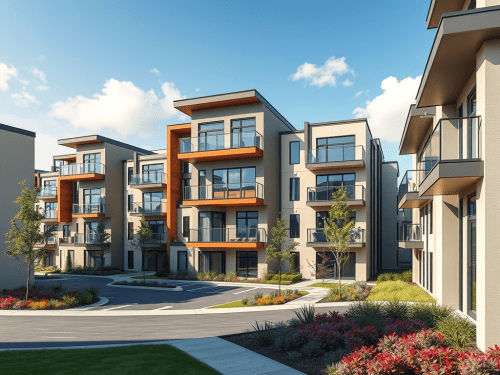
Resilient Demand Off sets Supply Wave,
Fueling Vacancy Compression and Rent Growth
Fundamentals still firm. Recently elevated construction was focused in the New Tampa-East Pasco County area, which welcomed nearly 3,200 units last year, followed by the Brandon-Southeast Hillsborough County area with 2,300. This influx of new supply was met with record levels of demand. Metrowide net absorption exceeded 4,700 units in each of the past two quarters, driven by strong household formation, in-migration that ranked eighth in the nation and displaced residents finding new housing after the 2024 hurricanes. Looking ahead, potential nonrenewals from these renters could soften demand, though this may be off set by completions falling to just over half of 2024’s total. The aforementioned submarkets and West Pasco-Hernando will still receive most of the new supply.
Continued vacancy declines drive rent outlook. Record demand
helped Tampa’s vacancy compress entering this year, reaching its
lowest level since late 2022. Suburban areas in the metro’s outskirts
recorded some of the steepest declines despite rapid local inventory
growth — in part due to heightened concessions. Meanwhile, the
urban core is expected to ramp up construction in 2026 — more than
doubling 2025’s anticipated additions — potentially causing upward
vacancy pressure. Still, continued population growth and a scaledback delivery pipeline elsewhere should push metrowide vacancy
down through the rest of 2025. This will aid rent growth, particularly in the supply-constrained submarkets that led recent gains.

Multifamily 2025 Outlook
- EMPLOYMENT:
- Tampa’s employment market grew at
- the second-slowest pace among major
- Florida markets last year. Yet momentum picked up in early 2025, adding
- 4,100 jobs and outpacing gains in each
- of the previous three quarters.
- CONSTRUCTION:
- Although deliveries will taper from
- previous levels through the remainder
- of 2025, another 6,500 units are slated
- to hit the market in 2026, highlighting
- ongoing developer confi dence here.
- VACANCY: Moderating population and
- employment growth will coincide with
- a pullback in completions this year.
- As such, a continuation of vacancy
- declines will bring the metro’s rate
- down to 5.0 percent by year-end.
- RENT: The average Class A concession fell
- 1.2 percent during the year ended in
- March, while Class B/C properties
- recorded slight upticks. Strong
- fundamentals in higher-end assets
- will help monthly rents rise to $1,890.
Investment Highlights
Tampa saw year-over-year average sale price appreciation of 1.3 percent,
lagging behind the national rate of 1.5 percent. Transaction velocity during
the year ended in March rose by 20 percent from the previous year, however, while dollar volume grew by over 50 percent . Trades in the $20 millionand-up price tranche nearly doubled from last year. The metro outpaced other Florida markets in this category, including Orlando — the next most
active — which recorded 40 percent fewer deals. Meanwhile, trading in the
$1 million to $10 million range only noted a slight uptick.
- Momentum should continue this year as insurance costs per unit — which
posted annual growth near 35 percent entering January — were down
roughly 13 percent in the fi rst quarter of 2025 . Still, these costs are volatile,
and potential future natural disasters pose an upside risk to premiums. - The Interbay Peninsula recorded the largest annual increase in transaction velocity among submarkets, nearly doubling the prior year’s total.
Most of the properties that traded hands were pre-1990 builds priced under $10 million. The area also posted its highest quarterly net absorption since at least 2000, helping drive a 170-basis-point annual vacancy decline
 The Commercial Real Estate Alpha Site
Leave a comment