The days of declining apartment rents are coming to an end as supply dwindles and demand rises, as landlords regain leverage, fueling more inflation.

February 14, 2025
By CRE Daily Staff and Han Lung via CRE Daily
Key Highlights
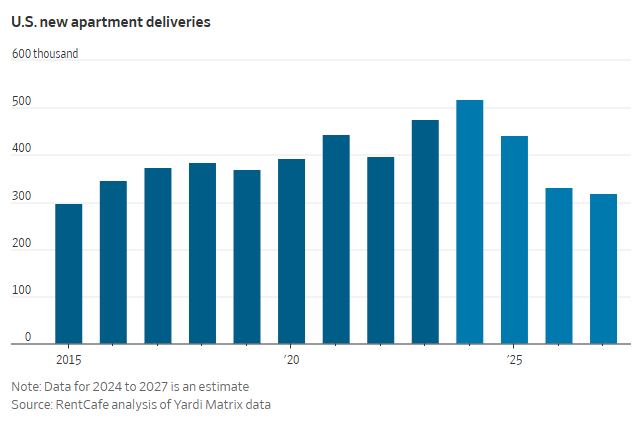
- A surge in apartment construction in 2023 and 2024 led to temporary rent drops, but new supply is drying up, setting the stage for rent hikes.
- Rising rents could keep inflation elevated, making it harder for the Federal Reserve to lower interest rates.
- The Sunbelt rental market is rebounding, with major investors betting on price growth in cities like Atlanta and Denver.
US renters may soon be in for harder times. The days of declining apartment rents are coming to an end as supply dwindles and demand rises, according to WSJ.
With construction slowing and rental competition intensifying, landlords are regaining their leverage—potentially fueling inflation and delaying Federal Reserve rate cuts.
Move Aside, Renters
The wave of new apartment construction that helped push rents down in 2023 and 2024 is beginning to subside, signaling a shift back to a landlord-friendly market. High mortgage rates are keeping more people in rentals, while new supply is expected to slow significantly by the end of the year.
“The relationship is going to very quickly flip from a renter-friendly environment to a landlord-friendly environment,” said Lee Everett, head of research and strategy at multifamily investment firm Cortland.
Multifamily vacancy rates are now below their long-term average, and the demand for rentals is intensifying. According to RentCafe, in 2024, an average of nine renters competed for every available apartment.
Threat to Inflation
The prospect of rising rents could complicate the Federal Reserve’s effort to bring inflation down to its 2% target. Shelter costs make up about one-third of the Consumer Price Index (CPI), meaning rent hikes could keep inflation higher for longer.
“It will be very hard for the headline inflation number to reach the Fed’s 2% goal without a slowdown in housing costs,” said Lisa Sturtevant, chief economist at Bright MLS.
While annual rent inflation slowed to 4.4% in January, the lowest rate since 2022, a renewed surge in rental prices could reverse that progress.

Tighter Rent Squeeze?
New apartment construction is already beginning to taper off, especially in the South, where multifamily building permits dropped 4% below their pre-pandemic average, per Census Bureau data.
Proposed tariffs on Canadian and Mexican imports—which account for 25% of US building materials—could raise construction costs and slow down new developments even more.
Meanwhile, deportation policies could cut the available construction workforce, further tightening supply.
Sunbelt Rent Rebound
Despite recent rent declines in some Sunbelt cities, investors are returning, expecting a market rebound.
- Equity Residential (EQR) invested $274M in Atlanta and Denver in Q4, despite negative rent growth in both cities.
- Gaia Real Estate launched a new Sunbelt-focused REIT, betting that rent growth will return by late 2025.
“We assume that the second half of 2025 into 2026 will be back to rent growth,” said Gaia CEO Danny Fishman.

 The Commercial Real Estate Alpha Site
Leave a comment