

The U.S. owes too much money. In fact, it’s grown so large that on most graphs, you can’t even see the exponential upswing it’s taken over the past thirty years. Today, the U.S. owes roughly $30.93 trillion. To put that in a historical perspective, the United States’ current IOUs are the largest they have been since World War II when compared with the size of its economy. It has skyrocketed by six times since the start of the 21st century and is expected to grow an average of about $1.3 trillion a year for the next decade.
And what to do when you need to borrow more to cover your insatiable financial needs? Borrow more. But, like any credit card, the United States has a limit. The only difference is that it’s a bit larger than your personal credit card.

Let’s go back.
The statutory debt limit is a legislative cap on the amount of money that the United States government can borrow to meet its existing obligations. There has been a cap on the amount of dollars the government can borrow since 1917 when the U.S. Congress passed the Second Liberty Bond Act.
The U.S. hit the $31.381 trillion limit last Thursday, prompting Treasury Secretary Janet Yellen to issue “extraordinary measures” to ensure the government continues paying its debt and avoid default. More than anything, this limit is a technical lever that Congress must approve. Nothing more than an accounting rigamarole but a tall task for a divided legislative chamber, and fears are starting to spread that partisan brinkmanship could cause the U.S. to default on its debt for the first time in its history.
Yellen confirmed that the U.S. could juggle its IOUs until June but would then risk default if the ceiling isn’t lifted by then.
While it’s difficult to predict precisely how a U.S. default would play out, it would likely cause a spike in interest rates as U.S. investments would lose their security premium and creditworthiness, causing interest increases on all other debt, including mortgages and auto loans that are based on the U.S.’ risk-free rate.
If the U.S. does default, it would have to prioritize debt payments, essentially picking to pay back one claimant over the other. Social security versus Ecuador.
The Federal Reserve could theoretically step in if the U.S. default, pumping liquidity into the system by buying Treasury bonds. But that seems unlikely, considering the Fed’s historically apolitical stance.
U.S. debt is the bedrock of the global financial system. Not only does it enable the U.S. government to provide critical government programs such as social security and healthcare, among others, but it serves as the global risk-free “safety asset” for the economy. I guess risk-free is a stretch now…
A default to plunge the world into an unmitigated disaster and financial armageddon.
What now?
However, for now, the markets don’t seem too moved by the possibility of U.S. default. U.S. credit default swaps – an instrument that provides insurance if a default occurs have risen over the past months, implying heightened risk, but not as much as to stoke the alarm.
And the truth is, we’ve been here before. The debt ceiling has been raised 45 times in 40 years, and while we have come close to default before, its effects on the market have been fleeting.
The default would be far more of a political technicality than an economic one. Let them bicker about it in Congress. It may actually be a good thing that there’s a semblance of mutually assured destruction at play here. Raising the stakes of calamity but also equally the pressure of a resolution.
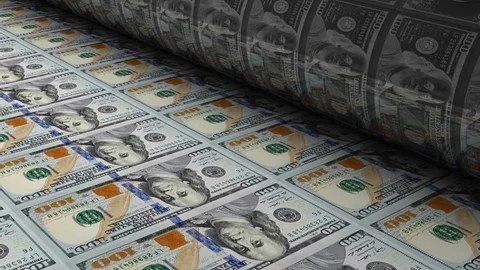
The Treasury could always print more money to satisfy its obligations. How about a $1 trillion coin? When you are in charge of the money, you can always just mint more. Unconventional monetary policy, but in this climate, anything is on the table.
 The Commercial Real Estate Alpha Site
Leave a comment